Before visiting Hangzhou, I had often heard about the beauty of its tea fields and West Lake. There is a well-known Chinese proverb—“Above there is heaven; below there is Suzhou and Hangzhou” (上有天堂,下有苏杭)—that captures just how highly these cities are regarded for their natural charm and cultural richness. After already taking in the beauty of Suzhou, my expectations for Hangzhou has risen quite high.
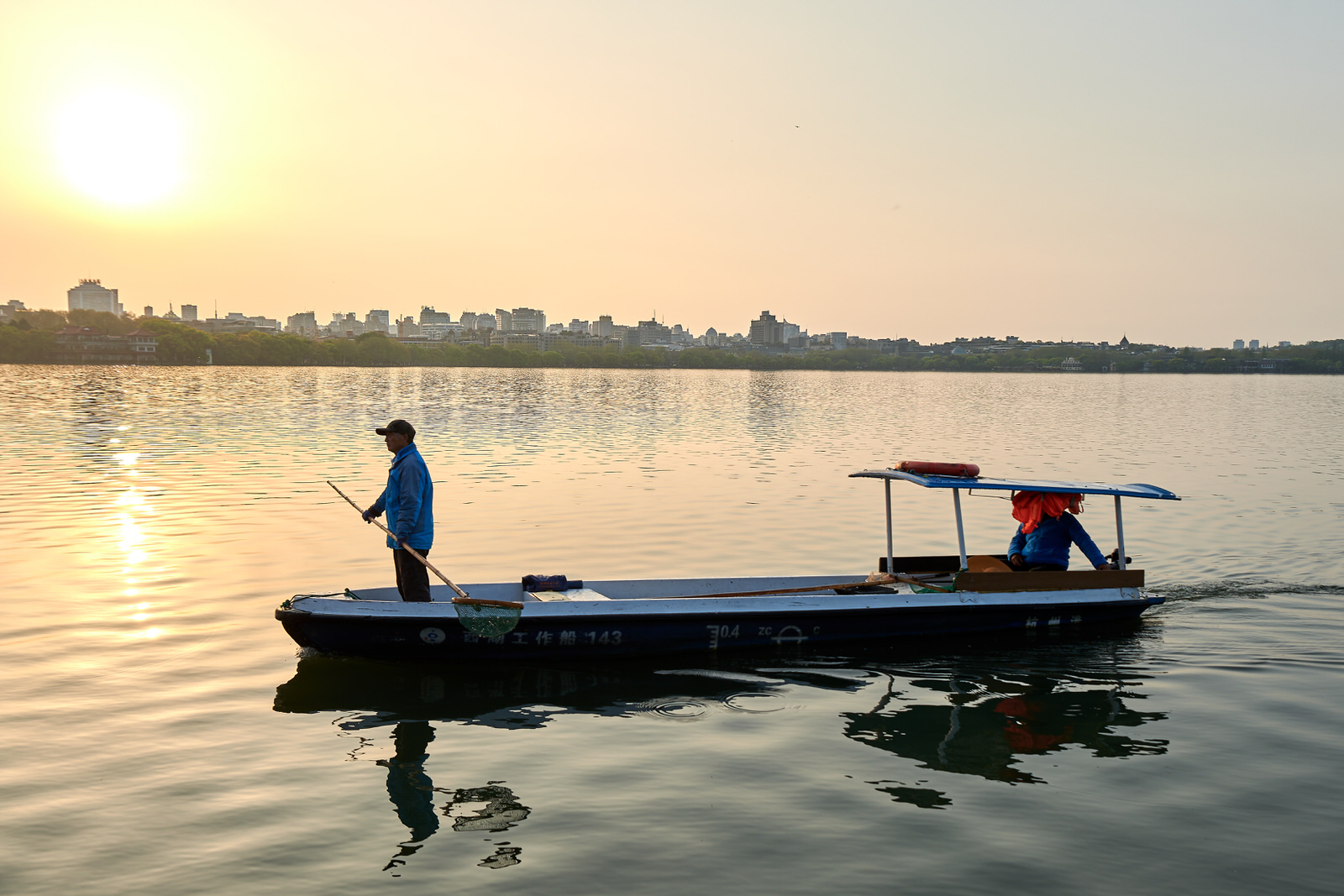
Our visit began at West Lake, arguably the heart of Hangzhou. We were treated to sweeping views of a broad expanse of water framed by rolling hills, with the occasional pagoda rising on the horizon. The causeways offered a distinctive way to explore the lake, gradually opening up into carefully maintained gardens tucked just beyond the shoreline. Despite the crowds that begin to gather by mid-morning, the area retains a sense of calm, with winding paths that lead to quieter, more secluded corners in every direction. In some of these secluded spots, we came across musicians performing traditional Chinese instruments, their music blending naturally into the landscape.
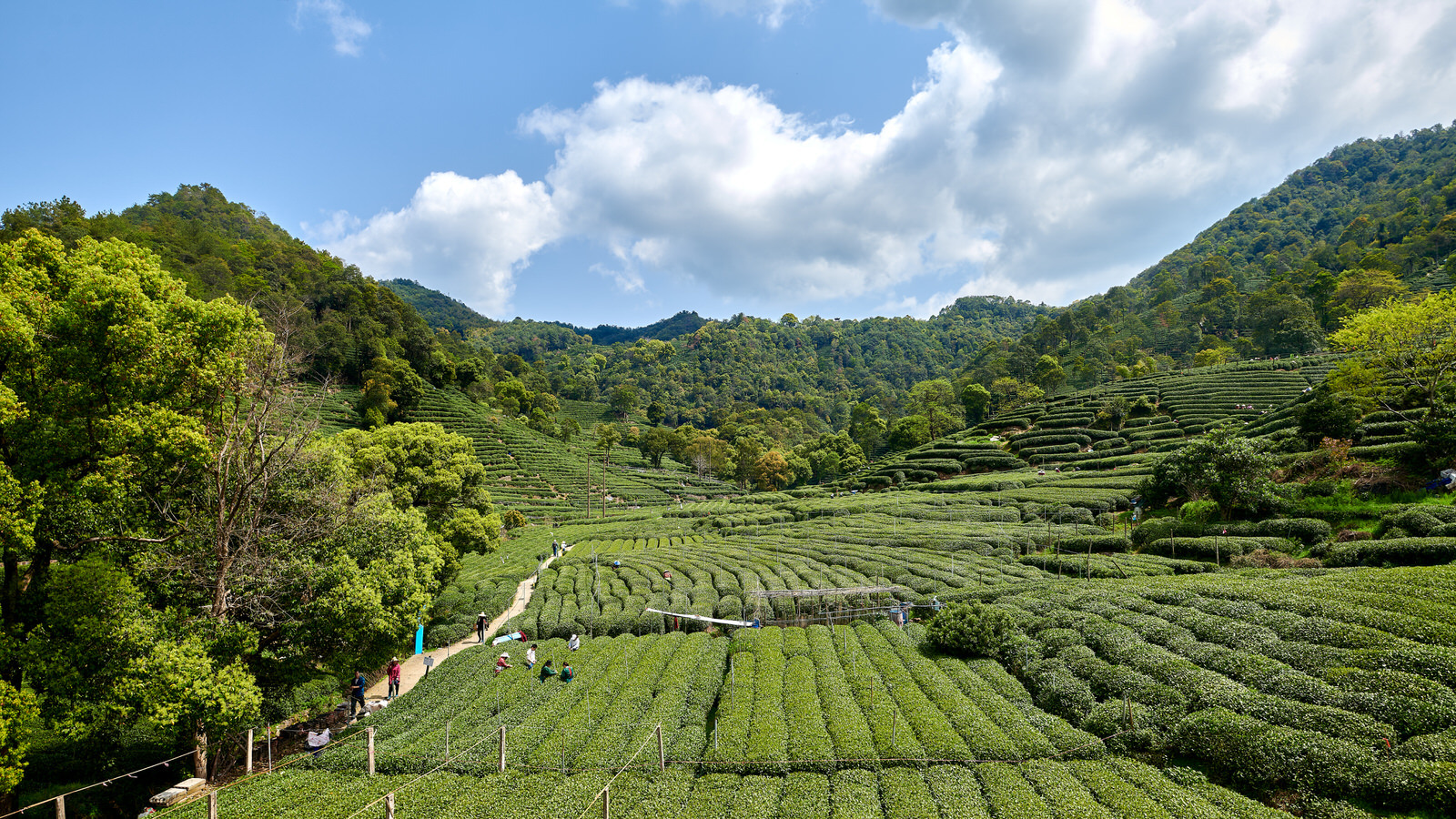
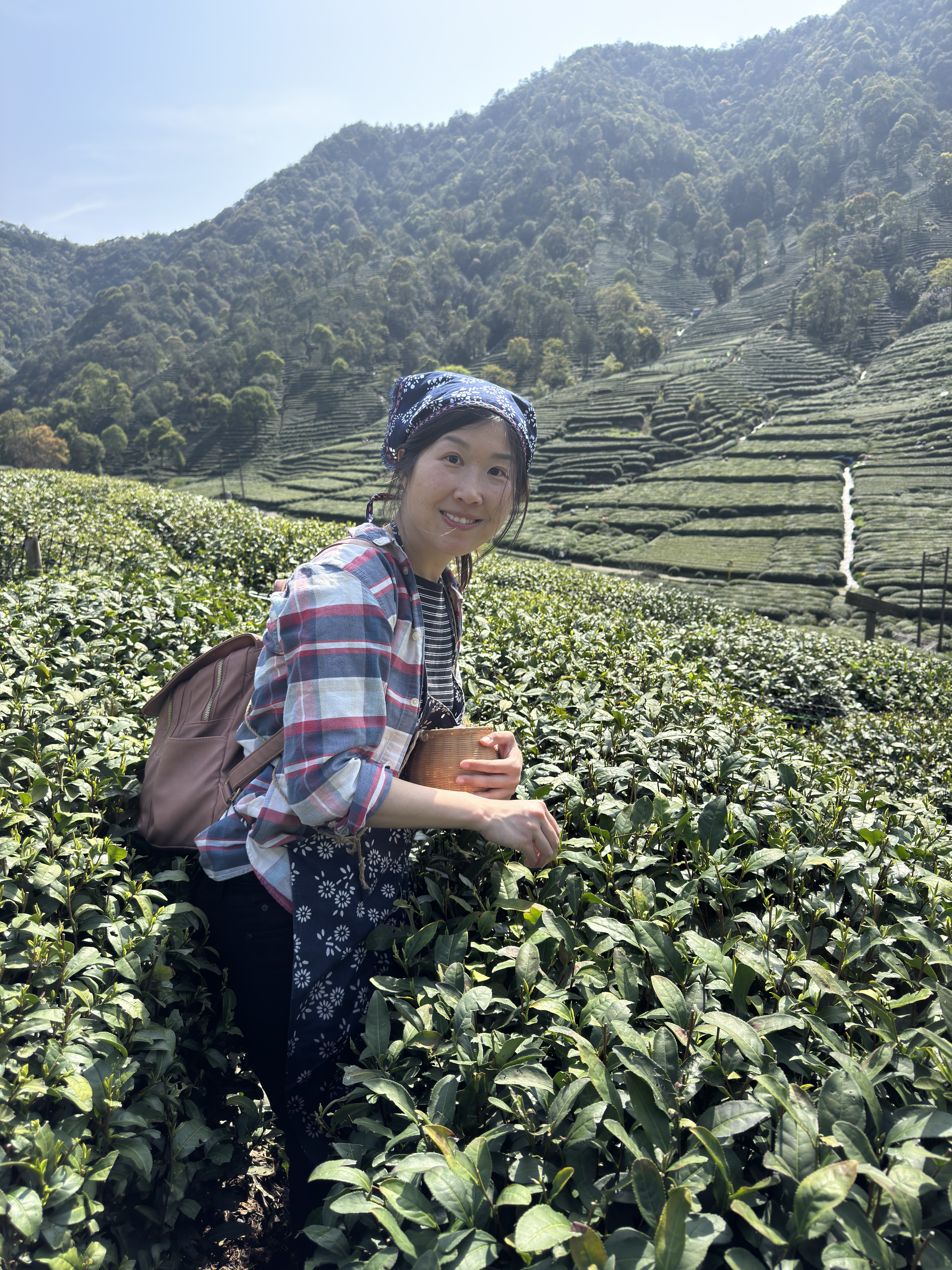
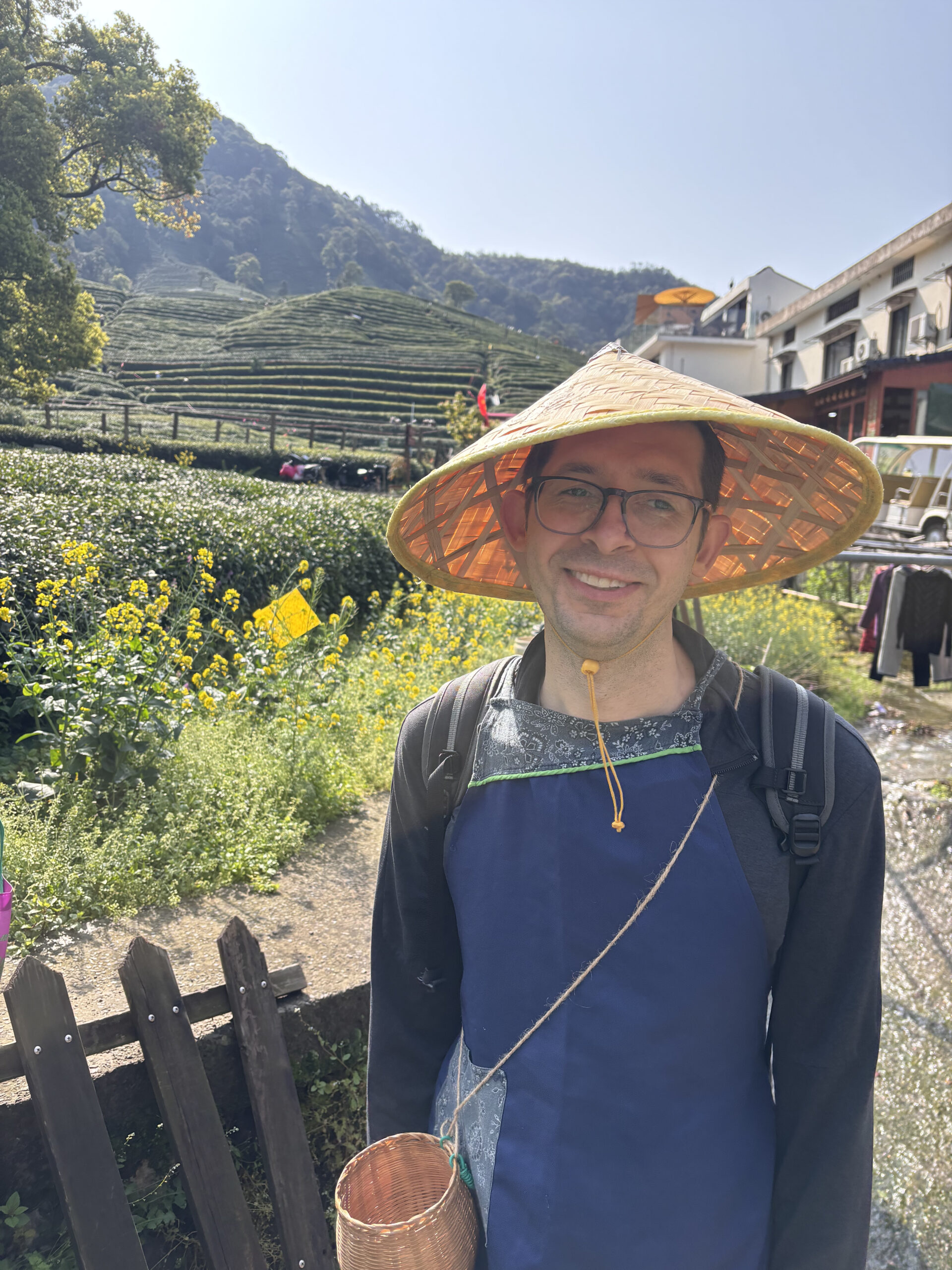
The following day, we visited the tea fields. I had relinquished planning for this part of the trip, and soon found myself dressed in a traditional tea-picking apron and a large conical hat. The tea picking was enjoyable, though I was rubbish at it. Fortunately, my wife and in-laws proved far more adept at selecting the best leaves. Later, we used our harvest to make tea back at the tea house, which added a satisfying sense of completion to the experience.
Beyond West Lake and the tea fields, Hangzhou offered a striking contrast of old and new. We stayed near the lake, where historic surroundings blended seamlessly with modern development. In the evenings, we visited the City Balcony, an area adjacent to the central business district. Here, Hangzhou revealed another side of itself: the subway emerges directly into a semi-open-air mall. Above the mall, however, lies a carefully designed riverside promenade.
On one side stands a striking golden spherical building known as the “Sun,” while opposite it is a crescent-shaped structure clad in blue glass—the “Moon”—often accompanied by a coordinated water display. Climbing the stairs to the balcony, a second massive skyline emerges across the Qiantang River. Just after dark, the most impressive coordinated light show begins.
Tower after tower on both sides of the river comes alive in synchronized color. Facades shift in waves of of color. The reflection on the water doubles the effect, turning the river into a glowing seam between two cities—one real, one mirrored.
From the elevated walkway, it all feels like a deliberately composed scene: the “Sun” and “Moon” structures framing the foreground like stage props, while the distant financial district becomes a vast animated backdrop. Beneath it all, the steady movement of commuters in the mall and subway station continues uninterrupted, grounding the spectacle in everyday life.
We left Hangzhou on a high note. It is a city that combines world-class green spaces with a strikingly modern skyline, while still preserving older neighborhoods full of character and atmosphere.