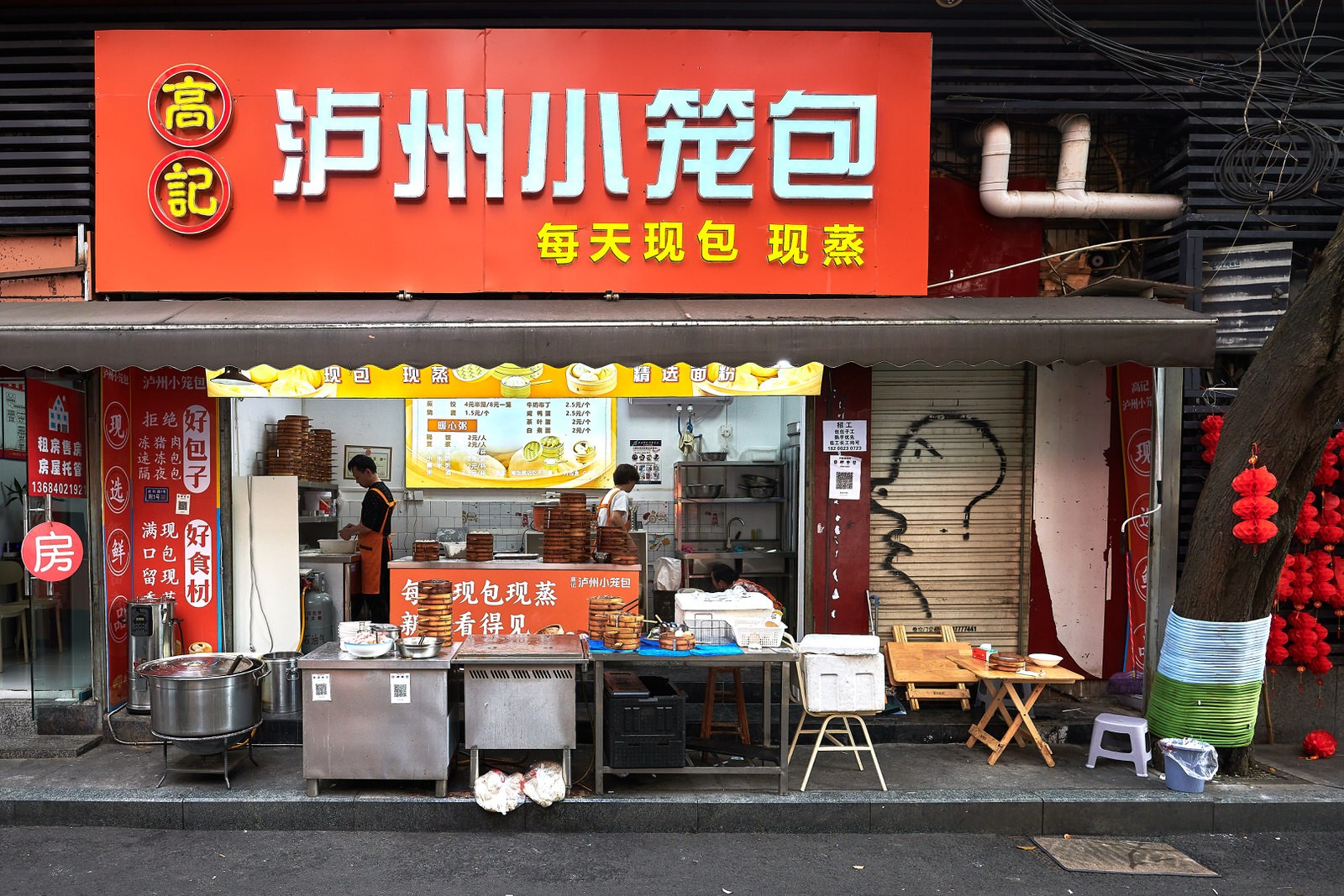
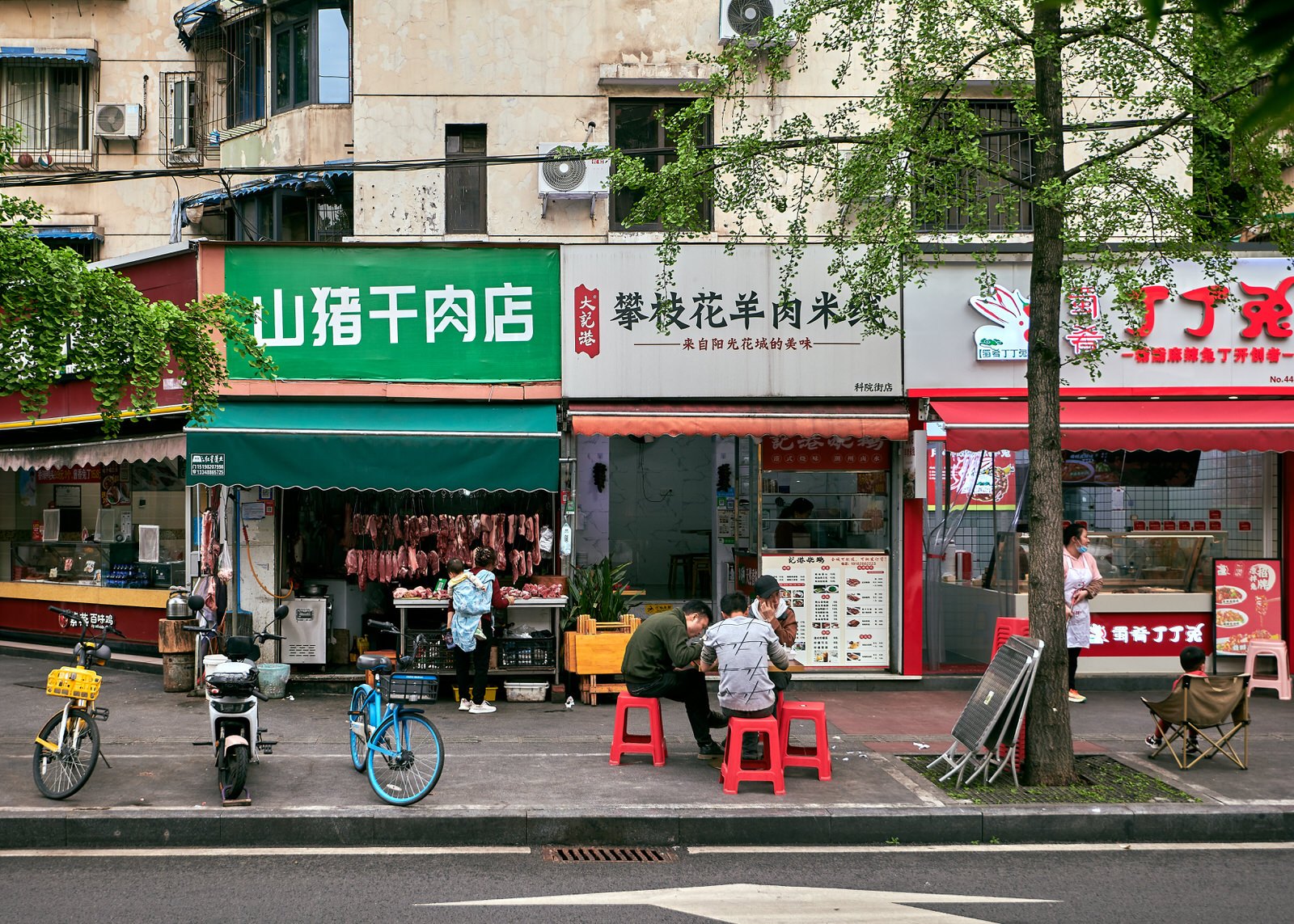
Chengdu was the final new city on our three-week journey from east to central China. Although our stay was brief, we hoped to make the most of it by basing ourselves in Yulin, a subdistrict in southern Chengdu known for its authentic atmosphere: low-rise apartment blocks, tree-lined streets, teahouses, small restaurants, and bustling local markets.
For weary travelers, it proved to be an excellent choice. So much of the neighborhood’s activity was within walking distance of our hotel. Street after street was lined with restaurants and shops catering primarily to locals. What stood out most was the diversity of the area — college students mingled alongside residents from both modest and affluent backgrounds. The neighborhood was anchored by two malls, one of them especially upscale.
Taking a break from the spoiled convenience of Yulin, we headed to People’s Park. The park was packed with people enjoying the day — some paddling across the lake, others watching elders give calligraphy lessons using giant water brushes on the pavement. As we wandered through the park, we came across the well-known Chengdu marriage market. It was my first time seeing one, which added an extra layer of intrigue to the day as we stopped to read through the notices, many of them posted by parents on behalf of their children.
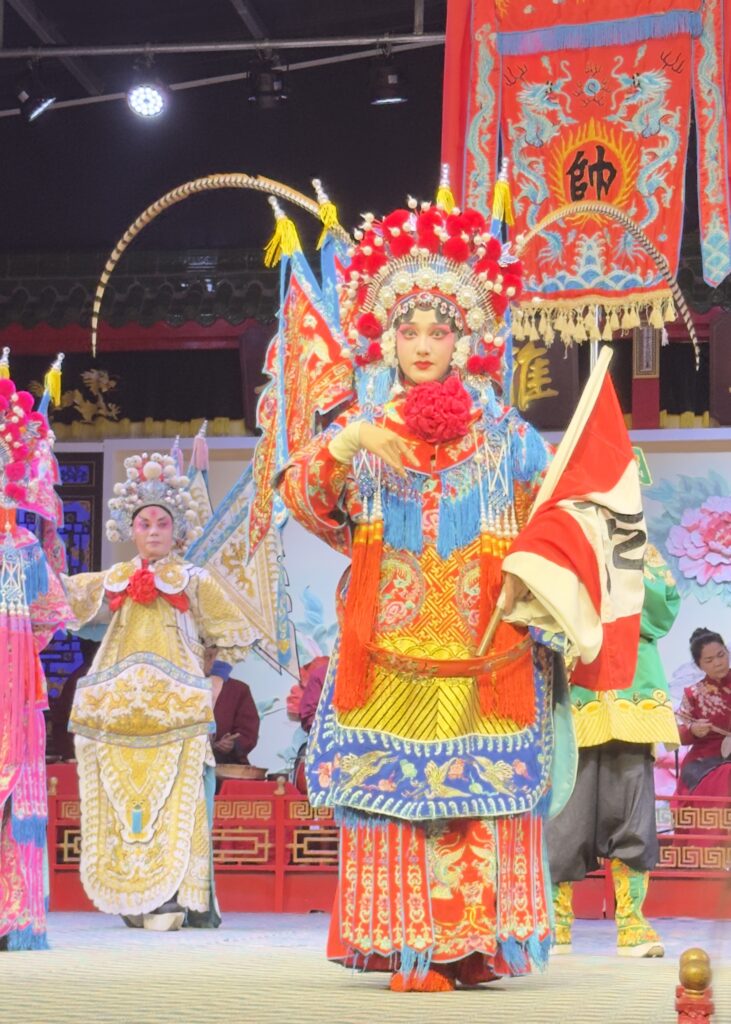
From People’s Park, we made our way to Kuan Alley and strolled along the ancient street for a while before heading to the theater. We had booked tickets to see Sichuan Opera, one of China’s seven best-known opera styles alongside Peking, Cantonese, Kunqu, Yue, Qinqiang, and Huangmei opera. Sichuan Opera is especially famous for its mesmerizing “face-changing” performances. I had no idea what else to expect and was pleasantly surprised by the depth of the show and the extraordinary talent of the performers. It was a perfect way to put an exclamation point on the trip.
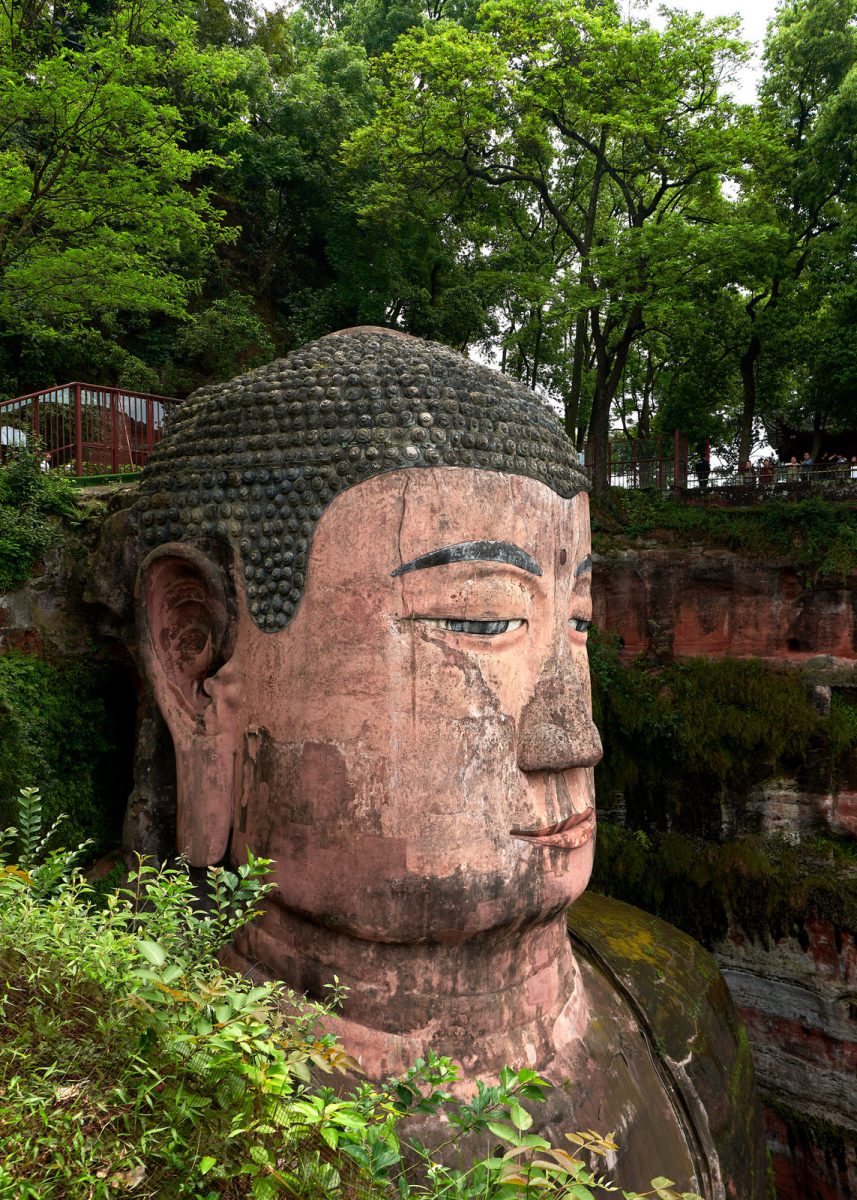
On our final full day in Chengdu, we took a day trip to Leshan to see the Giant Buddha. After buying last-minute train tickets at the station, we raced to our gate like a scene out of Home Alone. When we arrived in Leshan, we grabbed a rideshare and enjoyed glimpses of life in a smaller Chinese city as we made our way toward the Buddha, which sits just outside town. Our first stop turned out to be an entrance where only Chinese nationals could purchase tickets, so after some confused wandering, we eventually found the main entrance—complete with sweeping views of the river and the city skyline.
As we explored the Leshan Giant Buddha Scenic Area, I was struck by the sheer scale of everything around us. There were endless staircases and intricate carvings, all connected by winding paths lined with waterfalls and other water features that gradually led us toward the Buddha’s head and a nearby temple. We spent some time paying our respects at the temple before finally making our way to the Giant Buddha itself.
Seeing it in person was incredible. The statue is so massive that it almost feels unreal, and learning that it took three generations to complete made it even more impressive. After taking in the view from above, we followed a narrow pathway carved into the cliffside down to the Buddha’s base. It was here that I discovered my mother-in-law is afraid of heights! With plenty of reassurance and a few careful steps, we all eventually made it to the bottom, where there were countless photo opportunities waiting for us.