I had never heard of Nanxun before planning this trip. But when I discovered that there were numerous ancient water towns between Suzhou and Hangzhou—two of our main destinations—I became determined to fit one into our itinerary.
Of all the water towns, we ultimately chose Nanxun because it was said to be less commercialized than the others. However, after arriving from Suzhou, my first impression was one of mild disappointment. The first canal we followed felt busy and touristy, not all that different from what we had already seen in Suzhou. As we kept walking, however, the scenery gradually changed. The development became quieter and more modern, until we reached another canal running perpendicular to the first.
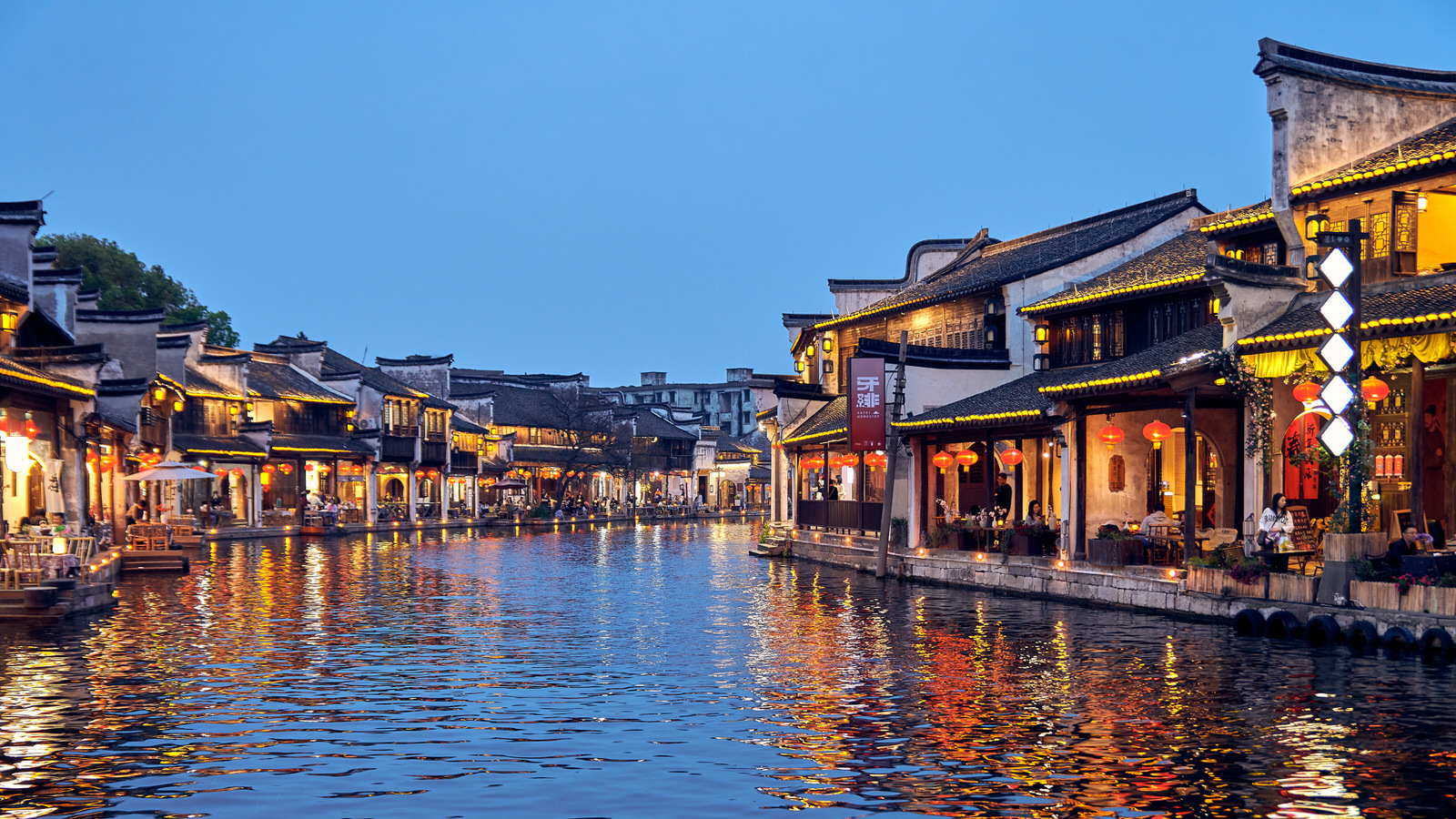
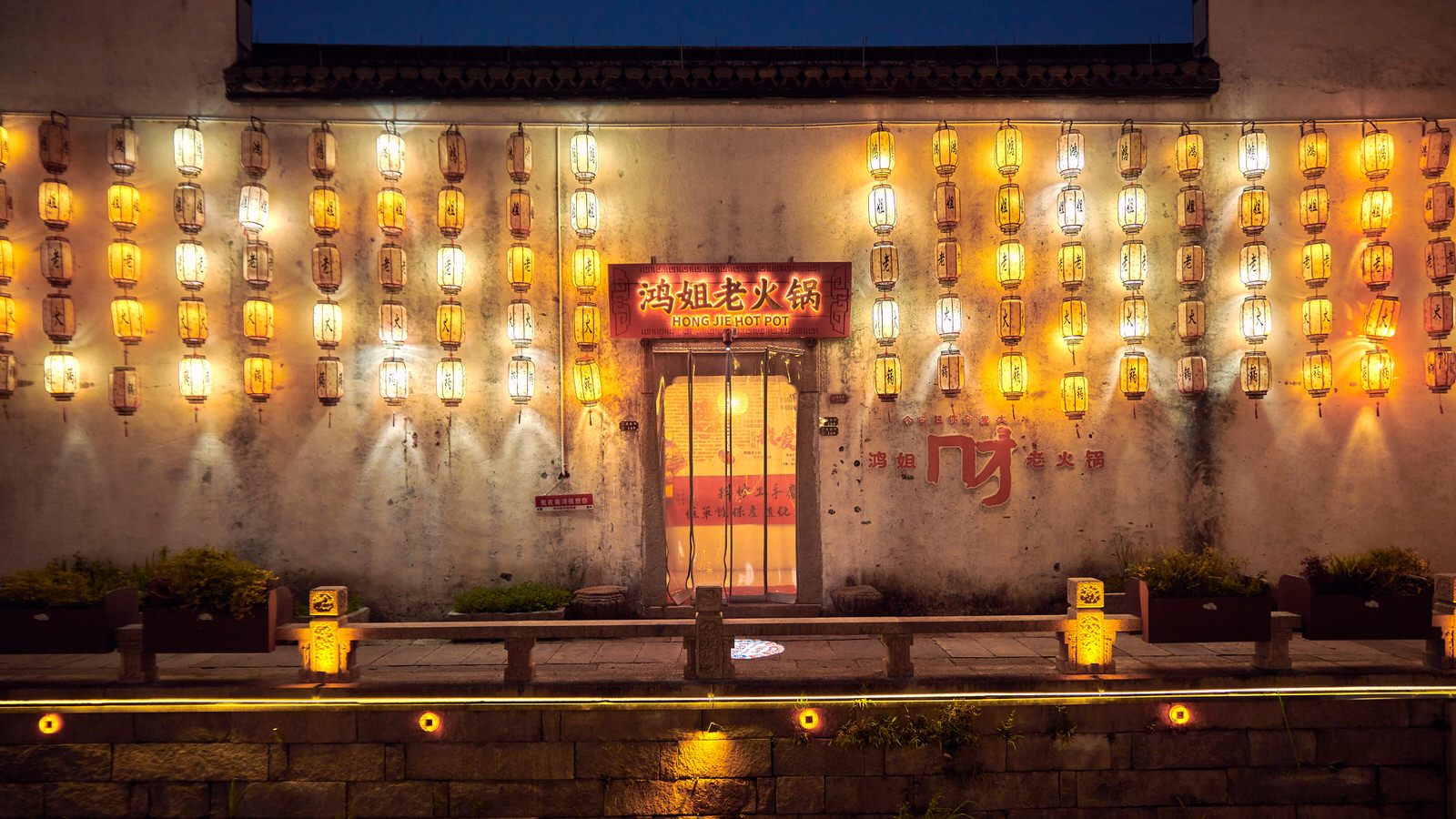
This second canal led us into an older part of town unlike anywhere else we had ever visited. The buildings lining the water were whitewashed with black-tiled roofs, their reflections shimmering in the canal below. The water rose almost level with the pathways, and many of the buildings had outdoor seating where people sat quietly admiring the view. We picked a spot that caught our eye, ordered bingfen, and watched as the sun set and lanterns slowly illuminated the canal.

Bingfen?
Bingfen is …. My first Bingfen was in NYC China town. It wasn’t very good. This one in Nanxun was amazing!
Although we did not spend much time in Nanxun, and the weather was dreary for most of our visit, we did stumble upon a small but fascinating museum about the history of silk production in both the town and China as a whole. The museum added valuable context not only to Nanxun itself, but also to Shanghai, which we had visited earlier in the trip.
In many ways, visiting Nanxun felt like stepping back in time. Signs of the town’s former wealth were everywhere, yet compared with many of the places we had visited, it seemed to have resisted the relentless pace of modern development. Life here moved more slowly. After an intense few days of travel, Nanxun felt calm, restorative, and deeply memorable.